
The Section 122 tariff, a temporary 15% import surcharge imposed under the Trade Act of 1974, took effect on February 24, 2026, and is scheduled to expire on July 24, 2026. Designed to address what the government defines as “large and serious United States balance-of-payments deficits,” this emergency measure mostly affects imports entering U.S. consumption.
Manufacturers routing inputs to Mexico face a major cost burden that can be eliminated with careful In-Bond techniques. In-bound movements let goods pass U.S. territory without official entrance, so avoiding the Section 122 tariff entirely, unlike consumption entries that set off the 15% fee. This 150-day tariff window requires exemption status and compliant routing to maintain margins.
What Is the Section 122 Tariff?
Under Section 122 of the Trade Act of 1974, the President can impose 15% import surcharges or quotas for 150 days to address large US balance-of-payments deficits or fundamental international payments issues. First 10% and then 15%, the Section 122 tariff took effect on February 24, 2026, after the president decided special import measures were needed to stabilize the economy.
For this emergency authority, the administration cited a $1.2 trillion goods trade deficit and a net international investment position of negative 90% of GDP at the end of 2024. These trade metrics may not be “balance-of-payments deficits” because the statute was written during Bretton Woods.
The tariff expires on July 24, 2026, unless extended by Congress. The temporary economic stabilization measures in Section 122 require Congressional consultation and are not permanent trade remedies. Since importers have a 150-day exposure window, short-term routing strategies are useful for cost avoidance.
Step 1: Determine If Your Imports Are Subject to Section 122
Before implementing avoidance strategies, you must first identify which shipments face the surcharge and which qualify for exemptions. According to American Action Forum analysis, more than 60% of U.S. imports are exempt from Section 122 tariffs, meaning a significant portion of trade may already be protected without additional action.
Check Your Product Classifications and Entry Types
Review your Harmonized Tariff Schedule (HTS) codes and entry documentation to assess exposure. Imports from all countries are subject to Section 122 tariffs. Importantly, the 15% Section 122 surcharge does not apply to goods subject to 25% to 50% Section 232 tariffs on steel and automobiles.
Examine your consumption entry records from the past 90 days to identify which shipments would have triggered the surcharge. Prioritize standard HTS entries without special treatment. These represent your primary exposure and the shipments most likely to benefit from In-Bond routing strategies.
Identify Exemption Categories
Two major exemption categories significantly reduce Section 122 exposure for North American manufacturers:
- USMCA Preferential Treatment: Products qualifying for preferential treatment under the United States-Mexico-Canada Agreement are excepted from Section 122 tariffs. You can avoid the 15% surcharge by claiming preferential duty treatment at entry if your goods meet USMCA origin rules. Review your USMCA certifications and origin documentation to confirm eligibility.
- Chapter 98 Provisions: Goods entered under most Chapter 98 provisions of the Harmonized Tariff Schedule are generally exempt from Section 122 tariffs, except for specific subheadings related to repairs, alterations, or processing. The temporary import, American Goods Returned, and duty-free entries are classified under Chapter 98. Verify your Chapter 98 classifications to determine if your shipments already qualify for exemption.
According to American Action Forum research, roughly 55% of imports are exempt from both Section 122 and Section 232 tariffs combined, demonstrating the substantial scope of these carve-outs.
Step 2: Calculate Your Tariff Exposure and Financial Impact
Quantifying your total cost impact is essential for determining whether alternative routing strategies justify their implementation costs. The trade-weighted average U.S. tariff rate reaches 13.0% under Section 122 at the full 15% surcharge, representing a significant increase in landed costs for non-exempt goods.
Run a Cost Analysis on Current Shipments
Calculate the 15% surcharge on landed value for your upcoming shipments using this formula:
(Customs Value + Freight + Insurance) × 0.15 = Section 122 Surcharge
For example, a shipment with a customs value of $100,000, freight costs of $5,000, and insurance of $500 would face a surcharge of $15,825 ($105,500 × 0.15). Apply this calculation across your import forecast to identify high-impact shipments where avoidance strategies deliver the greatest return.
Prioritize analysis of manufacturing inputs destined for Mexican facilities, as these represent the ideal candidates for In-Bond routing. U.S. goods exported to Mexico should never enter U.S. consumption, avoiding the Section 122 surcharge through customs procedures.
Project Costs Through July 24, 2026
Forecast your total exposure based on import volume and timing until the July 24, 2026, expiration date. Create a month-by-month projection of expected shipments, applying the 15% surcharge calculation to each period. This timeline analysis reveals your maximum potential liability and helps prioritize which shipments to reroute.
Compare total surcharge costs versus alternative routing expenses to determine return on investment. Supply chain modifications make sense if your projected Section 122 liability through July exceeds the incremental costs of In-Bond procedures, direct-to-Mexico routing, or timing adjustments. In your cost-benefit analysis, include administrative costs of new routing procedures, transportation costs, and inventory disruptions.
Step 3: Evaluate In-Bond Transfer Strategies to Avoid the Surcharge
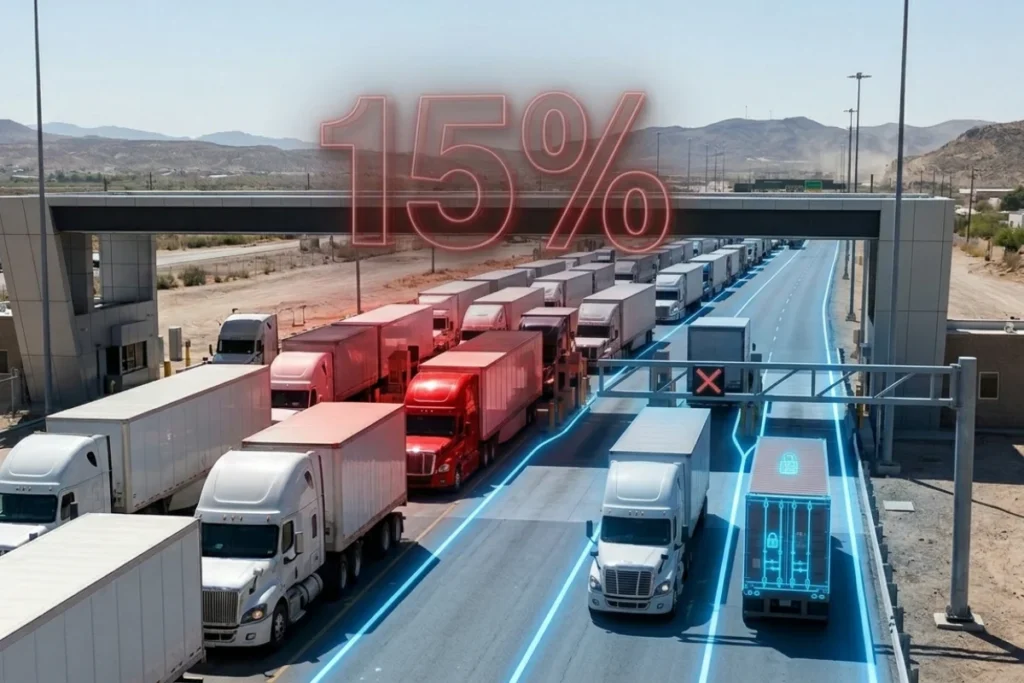
Manufacturing inputs to Mexico through in-bond procedures is the main way to avoid Section 122 tariffs and U.S. consumption entry. Company using U.S. ports as transit points for goods bound for Mexican factories benefits from this approach.
Understanding In-Bond Movements (IT/IE Entries)
In-Bond movements allow goods to transit through U.S. territory without formal consumption entry, thereby avoiding the Section 122 surcharge entirely. Two primary In-Bond procedures serve different routing needs:
- Immediate Transportation (IT): Allows goods to move from the port of arrival to an interior U.S. location (such as a border crossing point) under bond, without paying duties or being subject to the Section 122 surcharge. Shipments from coastal ports like Los Angeles or Houston that cross into Mexico at land borders benefit from IT entries.
- Immediate Exportation (IE): Permits goods to move from the port of arrival directly to a foreign destination (including Mexico) without entering U.S. commerce. IE entries work well for shipments that will exit the U.S. from the same port district where they arrived.
Both procedures require a customs bond and proper documentation, but they eliminate the consumption entry process that triggers Section 122 liability. The goods remain “in-bond” throughout their U.S. transit, never technically entering the country for consumption purposes.
Setting Up Direct-to-Mexico Routing
Contact your customs broker and carrier before shipment to arrange In-Bond transfers from U.S. ports to Mexican factories. The process requires planning but delivers immediate Section 122 avoidance:
- Step 1: Notify your customs broker at least 48 hours before vessel arrival that the shipment will move In-Bond to Mexico rather than entering U.S. consumption.
- Step 2: Provide complete destination information for your Mexican facility, including the specific border crossing point (e.g., El Paso-Juárez, Laredo-Nuevo Laredo) where the goods will exit U.S. territory.
- Step 3: Ensure your carrier can provide through-transportation to the border crossing point. The carrier must be bonded and authorized to transport In-Bond cargo.
- Step 4: File the appropriate In-Bond entry (IT or IE) with U.S. Customs and Border Protection, including the required bond coverage.
- Step 5: Track the shipment to the border crossing point and confirm proper export documentation when goods enter Mexico.
The 150-day Section 122 authority limit and July 24, 2026, expiration make timing crucial. Shipments arriving in May, June, or early July 2026 represent your highest-priority candidates for In-Bond routing, as these face the full 15% surcharge if entered for consumption.
Required Documentation and Customs Bonds
Compliant In-Bond movements require specific forms, bond coverage, and carrier coordination. Your customs broker will file CBP Form 7512 (Transportation Entry and Manifest of Goods Subject to CBP Inspection and Permit) to initiate the In-Bond movement. This form lists the goods, their origin, destination, and bonded carrier.
- Bond Requirements: You must maintain either a single transaction bond (STB) covering the specific In-Bond shipment or a continuous bond with sufficient coverage for all In-Bond movements. A bond typically covers the duties, taxes, and fees owed if the goods are consumed, including the 15% Section 122 surcharge. This bond protects CBP in case goods are diverted from their intended export destination.
- Carrier Coordination: Your transportation provider must be authorized to carry In-Bond cargo and must deliver the goods to the designated export location within the timeframe specified on the In-Bond entry (typically 30 days). Cooperate with cross-border carriers to avoid Section 122 liability if the goods are deemed entered for consumption due to missed deadlines or improper handling.
At EP Logistics, our expertise in cross-border In-Bond procedures and CTPAT Tier II certification ensures compliant, efficient transfers that protect your goods from temporary tariff regimes while maintaining supply chain velocity.
Step 4: Explore Alternative Routing and Sourcing Options
Beyond In-Bond procedures, short-term supply chain adjustments can minimize tariff impact during the 150-day Section 122 window. These strategies work best for companies with routing flexibility and the ability to absorb temporary logistics changes.
Rerouting Shipments to Non-US Ports
The Section 122 surcharge exceeds the additional transportation and handling costs of bypassing U.S. territory, making direct shipment to Canadian or Mexican ports profitable. Routing directly to Manzanillo, Veracruz, or Lázaro Cárdenas eliminates U.S. customs for goods bound for Mexican factories.
Conduct a cost-benefit analysis comparing the 15% surcharge versus additional ocean freight costs, longer transit times, and potential port congestion at alternative destinations. Even with higher per-container shipping rates, direct-to-Mexico routing saves money on high-value, low-weight goods with large surcharges.
Consider port infrastructure and clearance efficiency when evaluating alternatives. Beyond ocean freight, some Mexican ports have faster customs processing and better inland transportation, affecting total landed costs.
Accelerating or Delaying Shipment Timing
Strategic timing decisions based on the July 24, 2026 expiration date can reduce or eliminate Section 122 exposure for goods with flexible delivery windows. Careful inventory planning can save a lot without changing routing or procedures.
- High-Value, Low-Urgency Goods: Accelerate shipments scheduled for May through July 2026 to arrive before February 24, 2026, or delay them until after July 24, 2026, to avoid the surcharge window entirely. This works well for capital equipment, spare parts inventory, or seasonal goods where early or late delivery doesn’t disrupt operations.
- Routine Inventory: For regular production inputs with predictable consumption rates, delay shipments if feasible until after the expiration date. Build temporary buffer inventory before February 24, 2026, to cover the 150-day gap, then resume normal shipping schedules in late July.
Create a decision matrix categorizing your imports by value, urgency, and inventory flexibility. Prioritize timing adjustments for shipments where the Section 122 cost exceeds the carrying cost of early inventory or the operational impact of delayed delivery.
Step 5: Understand Your Legal Rights and Refund Opportunities
Constitutional challenges to Section 122 authority create potential refund mechanisms if the tariffs are ultimately overturned by courts. Understanding these legal developments and preserving your administrative remedies protects your ability to recover surcharge payments should litigation succeed.
Current Legal Challenges to Section 122 Authority
Active litigation, including the Burlap & Barrel v. Trump case, challenges the constitutional validity of Section 122 tariff authority based on the distinction between balance-of-payments deficits and trade deficits. Lawyers say the administration’s justification confuses two economic concepts.
As Andrew McCarthy of the National Review Institute explains, “In Section 122, Congress endowed the president with narrow, temporary authority to impose tariffs ‘to deal with large and serious United States balance-of-payments deficits’. What Trump is complaining about is the balance of trade, not of payments.” This distinction is critical because balance-of-payments accounting includes capital flows, investment income, and financial transfers—not just merchandise trade.
The legal dispute centers on whether Section 122’s emergency authority, established during the Bretton Woods fixed-exchange-rate era, applies to floating-exchange-rate balance-of-payments crises. The judges will decide if the $1.2 trillion goods trade deficit is a “fundamental international payments problems” Congress intended to address in 1974 when writing Section 122.
If courts rule that Section 122 authority was improperly invoked, importers who paid the surcharge and properly preserved their protest rights may be entitled to refunds with interest.
How to Preserve Your Right to Refunds
File CBP protests to preserve refund rights while constitutional challenges proceed through courts. The protest process creates an administrative record of your objection to the Section 122 surcharge and maintains your legal standing to claim refunds if the tariffs are overturned.
- CBP Protest Timeline: You must file a protest within 180 days of the liquidation of the entry on which Section 122 duties were assessed. Missing this deadline permanently forfeits your refund rights, even if courts later invalidate the tariffs.
- Required Documentation: Maintain complete records, including entry numbers, payment records showing Section 122 surcharge amounts, and the legal basis for your challenge (typically citing the constitutional arguments raised in active litigation). Your customs broker can file protests on your behalf using CBP Form 19.
- Preservation Strategy: File protests on all consumption entries subject to Section 122 tariffs, even if you believe the surcharge is legally valid. Protest filings cost little compared to the refund opportunity if litigation succeeds. If pending court cases resolve favorably, protesters can argue that your entries should be treated equally.
Consult with trade attorneys specializing in customs refund claims to ensure your protests are properly filed and contain the necessary legal arguments to support refund eligibility.
Step 6: Work with Experienced Customs Brokers and Legal Counsel
Select customs brokers with demonstrated Section 122 expertise based on these criteria:
- In-Bond Procedure Experience: Your broker must have extensive experience executing IT and IE entries, coordinating bonded carriers, and managing export confirmations at border crossing points. Request references from clients who have successfully used In-Bond routing to avoid temporary tariffs.
- USMCA Exemption Knowledge: Deep understanding of USMCA rules of origin, preferential treatment claims, and certification requirements ensures you maximize exemption opportunities for qualifying goods.
- Balance-of-Payments Tariff Precedents: While Section 122 has rarely been invoked in recent decades, brokers familiar with historical emergency tariff regimes can apply lessons learned to current compliance challenges.
Engage trade attorneys for protest filing, participation in constitutional challenges, or preparation of refund claims. Legal counsel becomes essential when:
- Your Section 122 liability exceeds $50,000, justifying the investment in professional protest preparation
- You want to participate in or monitor active litigation that may create refund opportunities
- Complex classification or exemption questions arise that require formal legal opinions
Integrating customs brokerage and cross-border transportation with logistics providers is the most efficient way for manufacturers to comply with temporary tariff regimes. Our road freight services and air freight logistic solutions are designed to support rapid routing adjustments while maintaining supply chain reliability.
The Section 122 tariff’s temporary nature creates both urgency and opportunity. During the 150-day window, compliant avoidance strategies protect margins, while those that delay face rising surcharge costs on every consumption entry. For additional guidance on avoiding customs complications, review our tips to prevent shipment delays and explore how strategic use of different modes of transportation in supply chain management can enhance your routing flexibility during temporary tariff regimes.
