

Commercial freight delays at the U.S.-Mexico border drain millions from the supply chain daily. At the El Paso-Ciudad Juárez crossing alone, systemic slowdowns account for an estimated $1.5 million in economic losses every day. For individual maquiladoras and automotive manufacturers, a single container flagged for an intensive Customs and Border Protection (CBP) exam accrues examination fees, demurrage, and detention charges that easily exceed $1,500 within the first 72 hours.
In the 2026 cross-border trade environment, strict USMCA enforcement and heightened CBP scrutiny require absolute operational precision. Supply Chain Directors cannot afford halted assembly lines due to missing Harmonized System (HS) codes or unverified commercial invoices. To mitigate these financial risks and ensure seamless crossings, manufacturing leaders rely on expert customs brokers who actively audit compliance before the cargo ever leaves the facility.
Over our 20 years of managing freight along the El Paso-Juárez corridor, our team has proven that proactive compliance prevents the vast majority of customs holds. This guide details the mechanics of commercial customs clearance, the reality of CBP hold times, and the strategies you need to protect your freight margins.
The Commercial Customs Clearance Process
Commercial customs clearance operates on a rigid sequence. A failure at any single point triggers an automatic hold at the port of entry.
- Pre-Arrival Documentation: The customs broker files the Entry Summary (CBP Form 7501) and transmits data via the Automated Commercial Environment (ACE) before the freight reaches the border. Required data includes the Bill of Lading, commercial invoice, packing list, and USMCA certificates of origin.
- Arrival and Initial Scan: Upon arrival, CBP officers cross-reference the digital filing with the physical cargo. High-volume crossings utilize VACIS (Vehicle and Cargo Inspection System) X-ray portals to scan trailers in transit.
- Targeting and Review: CBP’s automated systems evaluate the shipment data against risk parameters, analyzing importer history, commodity types, and HS codes. Cargo triggering compliance alerts is immediately segregated for physical examination.
- Duty and Tax Assessment: Once cleared, CBP finalizes the assessment of duties, specific tariffs, and the Merchandise Processing Fee (MPF). Under Delivered Duty Paid (DDP) arrangements, these financial obligations must be cleared to move forward.
- Release for Final Delivery: CBP issues the official release only when documentation is validated, physical exams conclude, and duties are settled, allowing the freight to enter U.S. commerce.
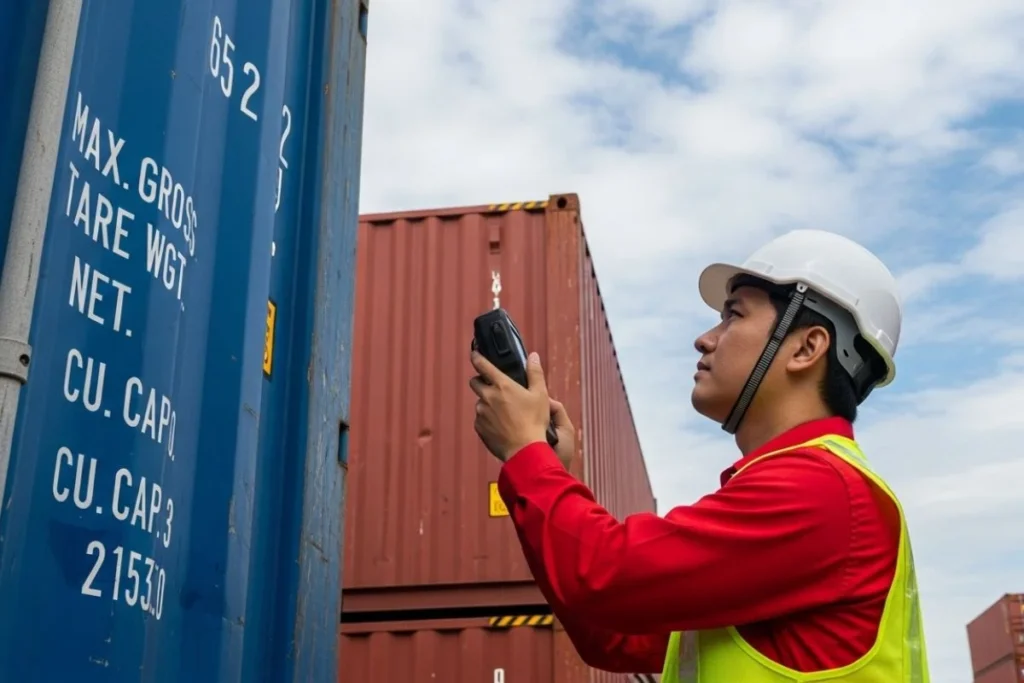
How Long Can a Commercial Customs Hold Last?
When a commercial shipment is flagged at the border, the immediate question from procurement teams is always about time. The reality is that Customs and Border Protection (CBP) does not operate on guaranteed service-level agreements for inspections.
In commercial freight, “holds” are not created equal. The duration depends entirely on the type of exam triggered and the speed of your broker’s response:
- Document-Based Holds (48 to 72 hours): If CBP flags a discrepancy in your commercial invoice or USMCA certificate, resolution typically takes 2 to 3 days, provided your customs broker submits the corrected paperwork immediately.
- Standard Physical Inspections (3 to 7 days): Standard tailgate inspections or VACIS (X-ray) anomalies usually delay freight for a few days, depending on port congestion.
- CBP Intensive Exams (2 to 4 weeks): When cargo is selected for a full-strip intensive exam, the trailer is moved to a Centralized Examination Station (CES). Due to facility backlogs, offloading, physical inspection, and reloading, this process routinely delays freight by weeks.
- The 30-Day Administrative Horizon: If CBP requires additional documentation (such as FDA or EPA clearance) and the importer fails to respond, the cargo can be held indefinitely. After 30 days of inaction, shipments risk being classified as abandoned, leading to seizure or return to origin.
The longer the hold, the higher the financial bleed. Our operations team consistently sees unmanaged intensive exams rack up catastrophic demurrage and storage fees. The key to mitigating these holds is preventing them through bulletproof documentation.
7 Strategies to Prevent Delays in International Freight Shipping
The difference between seamless cross-border transit and a 14-day hold comes down to operational discipline. Based on two decades of clearing commercial freight across the U.S.-Mexico border, here are the seven critical areas where supply chain managers must focus to prevent delays.
Harmonized System (HS) Code Classification Errors in Bulk Cargo
HS codes dictate the tariff rates, trade agreement eligibility, and admissibility of your freight. CBP automated systems instantly flag shipments where the HS code contradicts the product description or historical data.
The Risk: Misclassification doesn’t just cause delays; it triggers audits and heavy fines.
Real-World Impact: We recently audited a client in the electronics manufacturing sector whose shipments were consistently delayed. They had been misclassifying high-tech components under a generic, lower-tariff HS code.
CBP flagged the anomaly, leading to a multi-day hold, a complete documentation overhaul, and retroactive fines. Once our brokers reclassified the inventory with pinpoint accuracy, their clearance times dropped back to under 24 hours.
Actionable Advice: Audit your product database quarterly. Never rely on supplier-provided HS codes without having a licensed customs broker verify them against the latest U.S. Harmonized Tariff Schedule.
Incomplete Commercial Invoices and B2B Documentation
The commercial invoice is the foundational document of cross-border trade. CBP officers rely on it to answer critical questions: What is the cargo? What is its value? Who are the transacting parties?
The Risk: Missing details force CBP to stop the clearance process and request clarification.
Actionable Advice: Ensure every commercial invoice includes the full buyer and seller details, precise product descriptions (avoid generic terms like “parts” or “samples”), exact quantities, unit prices, country of origin, and the correct currency.

Bill of Lading and Packing List Discrepancies
Data consistency across all your shipping documents is a fundamental requirement for customs clearance. The Automated Commercial Environment (ACE) cross-references data points instantly.
The Risk: If your Bill of Lading states 50 pallets, but your packing list shows 48, CBP views this inconsistency as a potential sign of fraud or smuggling, guaranteeing a physical inspection.
Actionable Advice: Implement strict digital validation workflows before documents are transmitted to your broker. The piece count, weights, and descriptions must match flawlessly across the Bill of Lading, commercial invoice, and packing list.
4. Overlooking Country-Specific Trade Compliance and FDA Holds
Commercial freight is subject not only to CBP regulations but also to Partner Government Agencies (PGAs). Shipping regulated commodities without the exact permits required by the destination country is a guaranteed path to a prolonged hold.
The Risk: Freight arriving without required PGA clearances cannot be released, regardless of how perfect the CBP documentation is.
Real-World Impact: We encountered an agricultural importer whose cross-border freight was suddenly confiscated. The issue? Missing sanitary import permits required by the USDA for a new product line.
The cargo sat at the border incurring massive daily storage fees while emergency permits were processed. By integrating a PGA checklist into their standard operating procedure (SOP), we eliminated this bottleneck entirely.
Actionable Advice: Identify all PGAs that regulate your commodities (e.g., FDA, EPA, DOT, USDA). Ensure that all specific licenses, manufacturer registrations, and compliance certificates are active and transmitted to your broker well before the freight reaches the border.
5. Incorrect Declaration of High-Value Freight
Valuation is a primary focus for customs authorities because it directly determines the duties and taxes owed.
The Risk: Under-declaring cargo value to lower tariff burdens or inconsistently declaring values across different shipments of the same commodity triggers immediate automated alerts within CBP systems. This leads to intensive audits, severe financial penalties, and delays.
Actionable Advice: Maintain absolute transparency and consistency in your valuation methods. Ensure that any specialized pricing structures, such as transfer pricing between related corporate entities, are legally documented and correctly reflected on the commercial invoice.
6. Incoterms Mismanagement (DDP vs. DDU)
Incoterms define who is responsible for the freight’s transportation costs, insurance, and, crucially, customs duties and taxes.
The Risk: A common source of delays occurs when the buyer and seller misunderstand who is responsible for paying the duties. If freight is shipped DDU (Delivered Duty Unpaid) and the buyer is unprepared to pay upon arrival, CBP will hold the cargo. Conversely, shipping DDP (Delivered Duty Paid) requires the shipper to calculate and fund all tariffs in advance. If those calculations are wrong, the freight stops at the border.
Actionable Advice: Clearly define Incoterms in your commercial contracts and prominently display them on the commercial invoice. If utilizing DDP, work with your broker to ensure funds are secured and tariffs are accurately pre-calculated based on current 2026 updates.
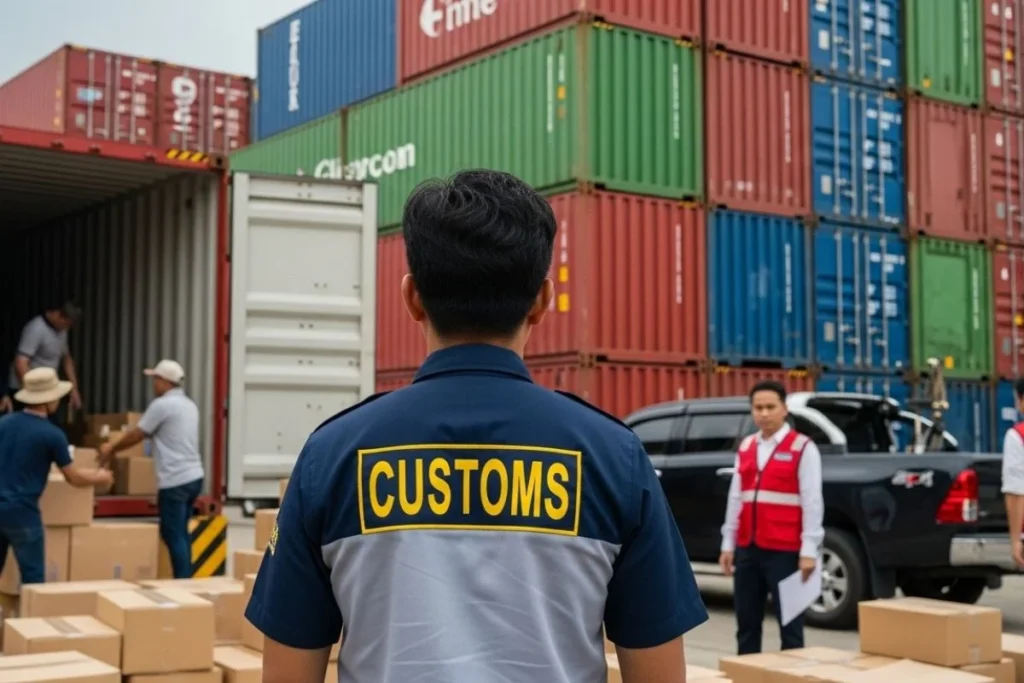
7. Failing to Prepare for CBP Intensive Exams
Even with perfect compliance, CBP conducts random intensive exams to establish baselines and enforce security. You cannot eliminate the risk of a random exam, but you can control how your organization reacts to it.
The Risk: Shippers who assume they will never be inspected often lack the financial buffer for sudden CES (Centralized Examination Station) fees or the schedule buffer for a two-week delay, causing downstream production crises.
Actionable Advice: Build buffer time into your critical supply chain schedules. Maintain meticulously organized digital records of all shipping documents so that if CBP requests additional information during an exam, your team can respond in minutes, not days.
Preclearance and 2026 Tariff Mitigation
Preventing customs delays goes beyond correctly filling out paperwork; it requires strategic foresight. The cross-border logistics landscape is actively shifting under the 2026 USMCA reviews and new tariff implementations.
The Strategy: Customs Preclearance Reactive clearance—waiting until freight physically touches the border to begin the review process—is a major liability for high-volume supply chains.
We strongly advise our enterprise clients to leverage Customs Preclearance procedures whenever applicable. By submitting all documentation to CBP before the freight departs the origin facility, officers can review and pre-approve shipments while they are still in transit. In our operations along the El Paso-Juárez corridor, implementing preclearance protocols routinely cuts border dwell times by up to 60%.
The Strategy: Tariff Navigation and Compliance Audits The end of duty-free de minimis treatment and the introduction of reciprocal tariffs in 2025/2026 have complicated duty calculations.
If your commercial invoice fails to reflect these new tariff realities, your freight will be held until the correct duties are assessed and paid. Regular, proactive compliance audits ensure that your internal systems match CBP’s latest fee structures, preventing administrative gridlock at the border.
Leveraging an Experienced Corporate Customs Broker
Managing commercial freight compliance internally is a massive drain on procurement resources and exposes your supply chain to unacceptable risks. When Octavio Saavedra founded EP Logistics over 20 years ago, the mission was clear: bridge the gap between regulatory complexity and operational speed for manufacturing and automotive clients.
Your customs broker should not be a passive entity that merely pushes paper; they must be a proactive extension of your compliance team. At EP Logistics, our experts actively audit your HS codes, manage your PGA documentation (FDA, USDA, EPA), and handle all duty disbursements. If an intensive exam is triggered, our boots-on-the-ground presence ensures immediate communication with CBP to expedite resolution.
If you are dealing with recurring holds, fines, or inconsistent clearance times, it is time to upgrade your compliance strategy. Discover how our international customs brokerage services can eliminate border friction and protect your bottom line.
Bulletproofing Your Cross-Border Supply Chain
Customs delays are rarely random. They are the direct result of misaligned data, outdated compliance practices, or poor Incoterms management. By auditing your commercial invoices, verifying your HS codes, preparing for PGA holds, and partnering with an expert broker, you transform border clearance from a bottleneck into a competitive advantage.
To build a truly resilient operation, customs compliance must be integrated into your broader logistics strategy. Whether you are understanding different freight transportation modes or seeking comprehensive strategies to improve overall supply chain efficiency, success demands end-to-end visibility. For companies seeking a partner capable of managing this complexity, explore our integrated freight logistics services to see how EP Logistics delivers tangible, cross-border results.
