
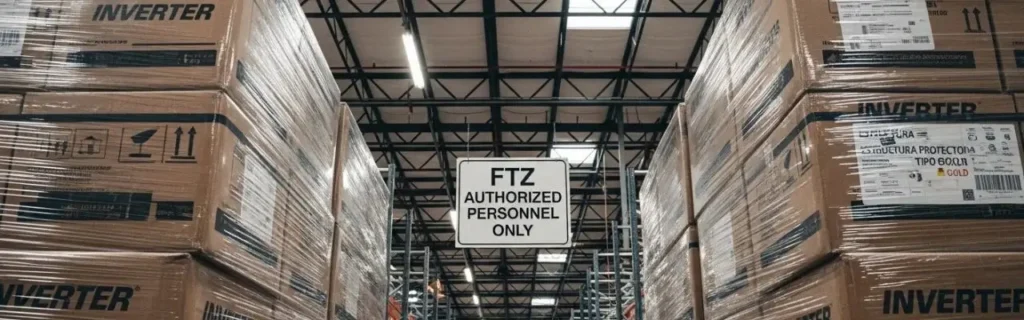
Businesses involved in international trade must constantly navigate changing regulations, fluctuating tariffs, and complex supply chains. One of the most powerful tools available to reduce these costs is the Foreign-Trade Zone (FTZ).
As a leading logistics service company, EP Logistics has helped manufacturers and importers leverage FTZs to optimize cash flow and compliance. But what exactly is an FTZ, and is it right for your business?
What is a Foreign-Trade Zone (FTZ)?
A Foreign-Trade Zone (FTZ) is a secure, designated area within the United States—typically located near a Customs Port of Entry—that is considered outside of U.S. Customs territory for duty and tariff purposes.
Established under the Foreign-Trade Zones Act of 1934, these zones allow companies to import foreign and domestic merchandise for storage, assembly, manufacturing, and processing without paying duties until the goods enter the U.S. market for consumption.
Key Distinction: If the goods are re-exported directly from the FTZ to another country, no U.S. duties or taxes are ever paid. This makes FTZs a critical component for companies looking to minimize tariff exposure and improve global competitiveness.

How an FTZ Works: The Financial Logic
The primary advantage of an FTZ is not just storage; it is financial arbitrage. By operating within a zone, companies can manipulate when and how much duty they pay. The three main financial mechanisms are:
- Duty Deferral: You pay nothing while the inventory sits in the zone. You only pay when you ship to a U.S. buyer. This frees up working capital that would otherwise be tied up in customs fees.
- Duty Exemption: If you import raw materials, process them, and then export the finished product to Mexico or Canada, you pay $0 in U.S. duties.
- Inverted Tariff (Duty Reduction): This is often the biggest source of savings for manufacturers.
The “Inverted Tariff” Math: A Real-World Example
An Inverted Tariff occurs when the duty rate for the finished product is lower than the duty rate for its individual raw components. In an FTZ, you can choose to pay the lower rate.
Scenario: An automotive supplier imports motor parts to assemble a finished engine control unit (ECU).
| Cost Factor | Without FTZ (Standard Import) | With FTZ (Inverted Tariff) |
|---|---|---|
| Imported Item | 10,000 Motor Parts | 1 Finished ECU (Assembled in FTZ) |
| Duty Rate | 6% (Rate for Parts) | 2.5% (Rate for Finished ECU) |
| Value | $100,000 | $100,000 |
| Duty Paid | $6,000 | $2,500 |
| TOTAL SAVINGS | — | $3,500 (58% Reduction) |
By electing “Privileged Foreign Status” or manufacturing authority within the FTZ, the company saves thousands per shipment simply by changing the tax classification of the goods before they technically “enter” the U.S.
Key Benefits of Foreign-Trade Zones
FTZs offer both operational and financial advantages that help businesses reduce costs, improve cash flow, and streamline customs processing.
1. Duty Deferral
What it means: You don’t pay customs duties until goods leave the FTZ and enter U.S. commerce.
Impact: If you store $500,000 worth of inventory in an FTZ for 90 days, you defer approximately $15,000-$30,000 in duty payments (depending on tariff rates). This capital can be reinvested into operations instead of being locked up in customs fees.
2. Duty Exemption
What it means: Goods that are re-exported directly from the FTZ to another country are never subject to U.S. duties.
Impact: Manufacturers using the U.S. as a processing hub for goods destined for Latin America can avoid paying U.S. tariffs entirely. This also eliminates the need for lengthy duty drawback processes.
3. Duty Reduction (Inverted Tariff)
As demonstrated in the previous section, you can elect to pay the lower duty rate between components and finished goods, leading to savings of up to 50-60% on certain product categories.
4. Merchandise Processing Fee (MPF) Reduction
What it means: Outside an FTZ, importers pay an MPF on every single shipment. The fee is 0.3464% of the shipment value, with:
- Minimum: $27.75 per entry
- Maximum: $587.67 per entry
Inside an FTZ, you can consolidate multiple shipments into one weekly entry, paying the MPF only once.
Example:
- A company makes 100 shipments per month (standard practice for high-volume importers).
- Without FTZ: 100 entries × $587.67 = $58,767/month
- With FTZ: 4 weekly entries × $587.67 = $2,350/month
- Annual Savings: $677,000
5. Streamlined Logistics
FTZs allow you to:
- Store goods indefinitely (unlike bonded warehouses, which have time limits).
- Repackage, relabel, or grade products to meet different market requirements.
- Destroy defective or damaged goods without paying duty.
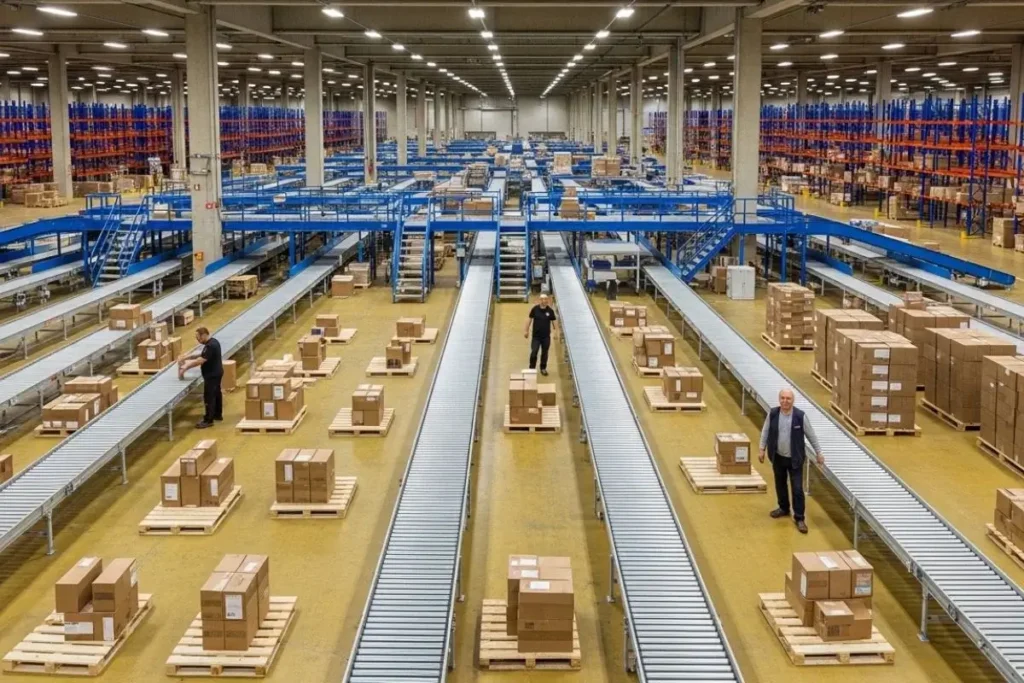
By integrating FTZ operations with advanced warehousing solutions, companies gain real-time inventory visibility, automated compliance tracking, and faster speed-to-market.
6. Cash Flow Benefits
Duty deferral combined with MPF reduction means you can manage tariff exposure strategically. If a new trade agreement reduces duty rates, you can wait to withdraw goods from the zone until the lower rate takes effect—locking in savings retroactively.
Types of Foreign-Trade Zones
Not all FTZs are the same. The U.S. Foreign-Trade Zones Board recognizes three primary designations, each designed to serve different operational needs.
1. General-Purpose Zone (GPZ)
Best for: Small to mid-sized importers, distributors, and 3PLs.
Description: A multi-user facility, typically located in an industrial park, warehouse complex, or near a port of entry. Multiple companies can lease space within the same zone.
Key Features:
- Shared infrastructure (security, CBP oversight, inventory systems).
- Lower upfront costs since facilities are already activated.
- Flexible space allocation (monthly or annual leases).
Example Use Case: An electronics distributor storing components before distribution to U.S. retailers can lease 10,000 sq. ft. in a GPZ near a major port.
2. Subzone
Best for: Large manufacturers with specialized production needs.
Description: A site-specific FTZ designation granted to a single company for operations at its existing facility (e.g., a manufacturing plant or refinery).
Key Features:
- The company owns or controls the entire zone.
- Allows manufacturing, assembly, and complex processing that GPZs may not support.
- The applicant is responsible for all costs (site activation, security, CBP bonds).
Example Use Case: An automotive manufacturer applies for Subzone status at its Texas assembly plant to take advantage of inverted tariff benefits on imported engine components.
3. Alternative Site Framework (ASF)
Best for: Companies needing rapid activation with minimal bureaucracy.
Description: A streamlined designation introduced to reduce approval timelines. ASF sites fall under an existing FTZ’s “service area” and can be activated in as little as 30-45 days (vs. 8-12 months for traditional applications).
Key Features:
- Usage-Driven Sites: Activated only when needed (ideal for project-based operations).
- Magnet Sites: Pre-approved locations ready for immediate occupancy.
- Lower documentation burden.
Example Use Case: A medical device company needs temporary FTZ space for a 6-month production run. An ASF “magnet site” allows them to begin operations quickly without a lengthy FTZ Board review.
Which Type is Right for You?
| Your Business Profile | Recommended FTZ Type |
|---|---|
| Importer/Distributor needing flexible storage | General-Purpose Zone (GPZ) |
| Large-scale manufacturer with existing facility | Subzone |
| Need fast activation for short-term project | ASF (Usage-Driven or Magnet Site) |
| 3PL managing multiple clients’ inventory | GPZ (Multi-User Setup) |
What Can You Do in a Foreign-Trade Zone?
One of the most common questions companies have is: “What activities are actually allowed inside an FTZ?”
The answer is nuanced. While FTZs offer significant operational flexibility, there are strict rules governed by U.S. Customs and Border Protection (CBP) and the Foreign-Trade Zones Board.
Permitted Activities
Any merchandise that is legally admissible into the United States can generally be admitted into an FTZ. Once inside, you can perform a wide range of operations:
| Activity | Description | Requires Special Approval? |
|---|---|---|
| Storage | Indefinite warehousing of goods | ❌ No |
| Distribution | Sorting and shipping to U.S. or foreign buyers | ❌ No |
| Repackaging / Relabeling | Changing packaging or labels to meet market requirements | ❌ No |
| Quality Control | Testing, sampling, grading, inspecting | ❌ No |
| Repair / Refurbishment | Fixing damaged or defective goods | ❌ No |
| Mixing / Blending | Combining domestic and foreign components | ❌ No |
| Destruction / Salvage | Destroying waste or unsellable goods (no duty paid) | ❌ No |
| Manufacturing / Assembly | Producing finished goods from raw materials | ✅ Yes (FTZ Board Production Authority) |
| Processing | Activities that change tariff classification | ✅ Yes (Production Authority) |
Most non-manufacturing activities (storage, repackaging, quality control) can begin immediately once the zone is activated. Manufacturing and processing require a separate application to the FTZ Board.
Prohibited Activities
The FTZ program is designed to support wholesale trade and manufacturing, not consumer-facing retail. The following are explicitly prohibited:
| Prohibited Activity | Why? |
|---|---|
| Retail Sales | FTZs cannot be used as storefronts or e-commerce fulfillment centers selling directly to U.S. consumers. |
| Activities Harmful to Public Interest | Goods deemed dangerous or against public health/safety can be excluded by the FTZ Board. |
| Circumventing U.S. Laws | Using an FTZ to avoid legitimate regulatory requirements (e.g., FDA inspections, EPA compliance) is illegal. |
Important Note: While retail sales are prohibited inside the FTZ, goods can be withdrawn from the zone and then sold retail after formal Customs entry.
Special Considerations
Government Agency Oversight:
- Even though FTZs are considered “outside Customs territory,” they remain under the jurisdiction of federal, state, and local authorities.
- Products requiring import licenses, permits, or inspections (e.g., pharmaceuticals, agricultural goods) must still comply with FDA, USDA, or EPA regulations.
Product Exclusions:
- The FTZ Board may restrict or exclude certain merchandise if zone facilities are inadequate for safe storage or handling.
- High-risk items (hazardous materials, explosives) may face additional security requirements.
What Is the FTZ Application and Activation Process?
The FTZ implementation journey involves two distinct but interconnected processes: application to the FTZ Board and activation with U.S. Customs and Border Protection (CBP).
Many companies underestimate the documentation requirements for both agencies. While the FTZ Board focuses on economic impact and zone boundaries, CBP scrutinizes security protocols, inventory systems, and compliance procedures.
This approach requires planning and coordination, and the entire process typically spans 9-12 months before you can begin operations.
Step 1 – Determine Eligibility for an FTZ
First, you need to confirm your business qualifies for FTZ benefits and determine which type of zone best suits your needs.
Step 2 – Prepare and Submit the FTZ Application
Requirements from the FTZ Board. Your application must include:
- Detailed business plan showing economic justification
- Site plans and facility descriptions
- Letters of support from local authorities
- Application fee payment
- Information about proposed activities
- Economic impact analysis
For ASF applications, the process is streamlined with fewer requirements, making it an attractive option for companies.
Documentation checklist
Prepare these essential documents:
- Fill the Form 214c for general-purpose zone applications
- Fill Form 214b for subzone applications
- Site maps and facility diagrams
- Proof of property ownership or lease agreements
- Letters of support from local economic development agencies
- Operator agreement with zone grantee
- Detailed business plan showing FTZ benefits
- Customs bond information.(required later during CBP activation)
EP Logistics can assist with preparing these documents through our customs brokerage expertise, ensuring all requirements are met the first time.
Step 3 — Understanding the FTZ Approval Timeline
FTZ approval timelines vary based on application type and operational complexity.
Standard applications typically take 10-12 months for processing, while ASF applications may be approved in 4-5 months. However, according to the U.S. FTZ Board’s case processing guidelines, production authority requests can add additional time.
Standard vs. ASF Timelines
Traditional Application Process:
- Production Authority: 10-12 months
- Manufacturing Subzone: 8-10 months
- Distribution Subzone: 5-7 months
- Boundary Modification: 3-4 months
Alternative Site Framework (ASF):
- Usage-Driven Site: 30-45 days
- Magnet Site: 30-45 days
- Boundary Modification: 30 days
Step 4 — Activate the FTZ with the U.S. Customs and Border Protection (CBP)
Once you receive FTZ Board approval, you must activate the zone with CBP before beginning operations. This process is equally important than the initial application.
CBP Activation Requirements
To activate your FTZ with CBP, you’ll need:
- Completed CBP Form 214 for activation
- Operator’s agreement with the zone grantee
- Detailed procedures manual
- Site security assessment and plan
- Detailed inventory control procedures
- Letter of concurrence from the zone grantee
- Background checks for key personnel
- Customs bond ($50,000 minimum)
CBP will perform a comprehensive site inspection prior to granting approval for activation
Inventory Control System Requirements
Your inventory system must meet strict CBP requirements, including:
- Real-time tracking of all merchandise
- Ability to distinguish between domestic and foreign status goods
- Audit trail capabilities for all movements
- Tracking of manufacturing inputs and outputs
- Ability to generate required CBP reports
- Reconciliation with CBP documentations
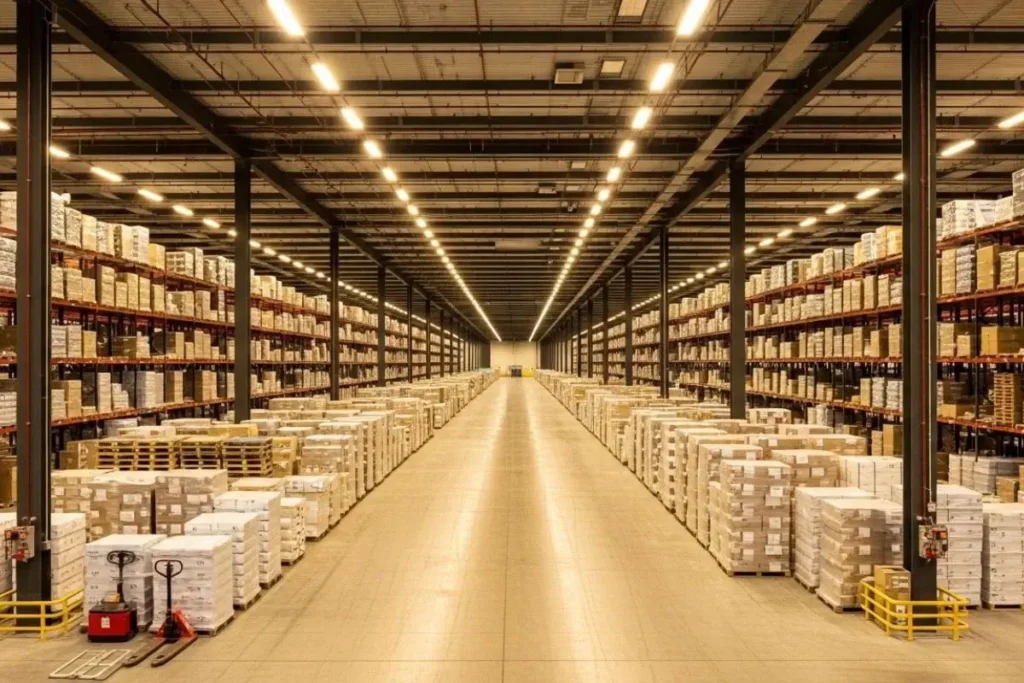
Many companies underestimate the requirements for FTZ inventory systems. EP Logistics’ warehousing solutions include FTZ-compliant inventory management systems that meet all CBP requirements.
Weekly Entry Filing (Type 06 / 19)
One of the key benefits of FTZ operation is the ability to file weekly entries instead of per-shipment entries.
This process needs:
- Implementing systems for tracking all admissions
- Coordinating with Experts in Logistics Solutions and Customs Brokerage Services
- Understanding HTS classification requirements
- Establishing procedures for weekly entry filing
- Training staff on proper documentation
e214 Admission Process
The e214 electronic admission process requires the following:
- Electronic filing of CBP Form 214
- Proper zone admission procedures
- Reconciliation with inventory systems
- Documentation of merchandise status
- Coordination with carriers and suppliers
Security and C-TPAT-Related Standards
CBP places heavy emphasis on security for FTZ operations, including:
- Procedural security protocols
- Carrier and supplier security verification
- C-TPAT alignment (not required)
- Physical security measures (fencing, cameras, access controls)
- Personnel security procedures
- IT systems security
Step 5 — FTZ Compliance Obligations (Ongoing Requirements)
Recordkeeping and reporting mandatory rules. FTZ operators must maintain comprehensive records, including:
- Annual reports to the FTZ Board
- Customs entry documentation
- Annual reconciliation reports
- Zone-to-zone transfer records
- Inventory control records (5-year retention)
- Admission and transfer documentation
- Manufacturing records (if applicable)
CBP conducts regular compliance reviews of FTZ operations:
- Focused Assessments examining overall compliance
- Quick Response Audits for specific issues
- Prior opportunities for self-reported violations
- Compliance Improvement Programs
Preparing for these audits requires ongoing internal reviews and well-documented compliance procedures
Penalties for Non-Compliance
FTZ compliance failures can result in significant penalties:
- Monetary penalties (up to double the loss of lawful duties)
- Personal liability for officers in cases of fraud
- Potential criminal charges for willful violations
- Suspension of FTZ privileges
- Revocation of FTZ status
Compliance & Inventory Control: The Operational Backbone of FTZ Success
Operating an FTZ is not just about receiving duty benefits—it requires rigorous inventory management and real-time compliance tracking. Companies that fail to maintain proper records face significant penalties, including suspension of FTZ privileges.
This section explains the compliance obligations and the technology infrastructure required to operate an FTZ successfully.
Why Inventory Control is Critical
Unlike standard warehousing, FTZs require zone-specific inventory systems that can:
- Distinguish status types: Foreign, domestic, privileged foreign, zone-restricted.
- Track every transaction: Admissions, removals, destructions, zone-to-zone transfers.
- Generate CBP-compliant reports: Weekly entry filings, annual reports, audit trails.
- Reconcile in real-time: Discrepancies must be identified and corrected immediately.
The Stakes:
- Minor violations: Fines ranging from $5,000 to $50,000.
- Major violations (fraud, gross negligence): Monetary penalties up to double the lawful duty + personal liability for company officers.
- Repeat offenders: Suspension or permanent revocation of FTZ authorization.
Required Inventory System Capabilities
CBP mandates that all FTZ operators implement systems capable of the following:
| Capability | Why It Matters |
|---|---|
| Real-Time Tracking | Every admission and removal must be recorded immediately (no batch updates). |
| Status Segregation | System must distinguish between foreign, domestic, and privileged foreign merchandise. |
| Weekly Entry Filing | Consolidate multiple shipments into a single CBP entry (reduces MPF fees). |
| e214 Integration | Electronic admission notices must sync with CBP’s Automated Commercial Environment (ACE). |
| Audit Trail Retention | 5-year record retention for all transactions, reconciliations, and corrections. |
| Destruction Tracking | Document all destroyed or scrapped goods (duty savings must be provable). |
Common System Failures:
- Using general warehouse management systems (WMS) not designed for FTZ rules.
- Manual spreadsheet tracking (high error rates, impossible to audit).
- Inadequate status change documentation (e.g., privileged foreign elections).
FTZ Management Software: A Strategic Necessity
Many companies underestimate the technology investment required to operate an FTZ compliantly. Generic inventory systems cannot handle zone-specific rules, leading to costly mistakes.
What to Look for in FTZ Software:
- CBP-Certified Compliance: Pre-built logic for weekly entry filing, e214 submissions, and annual reporting.
- Multi-Client Support: If you’re a 3PL, the system must segregate inventory by customer while maintaining zone-level compliance.
- Integration with ERP/WMS: Seamless data flow between your existing warehouse management system and the FTZ module.
- Real-Time Dashboards: Visibility into duty exposure, inventory aging, and compliance alerts.
Industry-Leading Solutions:
- ONESOURCE Foreign-Trade Zone Management (Thomson Reuters)
- SAP FTZ Module
- Oracle Trade Management Cloud
- Custom-built systems (common for large manufacturers)
For companies that lack internal IT infrastructure, partnering with a logistics service company experienced in FTZ operations can provide access to enterprise-grade systems without the capital investment.
CBP Audits: What to Expect
Types of CBP Reviews:
- Focused Assessments: Comprehensive compliance audits conducted every 3-5 years. CBP reviews all records, interviews staff, and tests system accuracy.
- Quick Response Audits (QRA): Triggered by red flags (discrepancies, whistleblower complaints, statistical anomalies). Unannounced, narrow in scope.
- Self-Disclosure Audits: If you discover a violation internally, voluntary disclosure to CBP can reduce penalties.
What CBP Examines:
- Inventory reconciliation accuracy (±1% tolerance).
- Weekly entry filing timeliness.
- Proper classification of goods (foreign vs. domestic).
- Security and access control logs.
- Operator manual compliance (are your procedures being followed?).
Best Practices to Prepare:
- Conduct internal audits quarterly (don’t wait for CBP).
- Train staff on FTZ-specific procedures (status changes, destructions, transfers).
- Maintain a compliance calendar for weekly filings, annual reports, and bond renewals.
- Document everything: When in doubt, over-document rather than under-document.
Annual Reporting to the FTZ Board
In addition to CBP oversight, the Foreign-Trade Zones Board requires an Annual Report from every active zone, due by March 31 each year.
Required Data:
- Total value of merchandise received and removed.
- Employment statistics (jobs created/maintained by FTZ operations).
- Exports vs. domestic shipments.
- Types of activities conducted (storage, manufacturing, processing).
Failure to File: Can result in suspension of FTZ designation.
EP Logistics: Your FTZ Partner in El Paso (FTZ 68)
Understanding FTZ regulations is one thing. Operating an FTZ compliantly while maximizing duty savings is another.
As a logistics service company with deep expertise in cross-border trade, EP Logistics provides turnkey FTZ solutions within Foreign-Trade Zone 68 (El Paso, Texas)—one of the most strategically located zones for U.S.-Mexico manufacturing and distribution.
Why FTZ 68?
El Paso sits at the intersection of three states (Texas, New Mexico, Chihuahua) and serves as a critical gateway for USMCA trade flows. FTZ 68 offers:
- Proximity to Major Ports of Entry: Santa Teresa, Bridge of the Americas, Ysleta-Zaragoza.
- Direct Access to Mexican Manufacturing Hubs: Ciudad Juárez (automotive, electronics, medical devices).
- Multimodal Connectivity: Rail (Union Pacific, BNSF), highway (I-10, I-25), and air cargo.
- Duty Savings for Re-Export: Ideal for companies using the U.S. as a consolidation point before shipping to Latin America.
EP Logistics FTZ Services
We provide end-to-end FTZ management, allowing your team to focus on growth while we handle compliance, inventory control, and CBP coordination.
Our Services Include:
| Service | What We Handle |
|---|---|
| FTZ-Certified Warehousing | Secure, access-controlled facilities within FTZ 68 with 24/7 surveillance and C-TPAT compliance. |
| CBP-Compliant Inventory Systems | Real-time tracking, e214 submissions, weekly entry filing, and annual reporting. |
| Activation & Application Support | We guide you through CBP Form 214, bond procurement, and site inspection preparation. |
| Duty Optimization Consulting | We analyze your import/export profile to identify inverted tariff opportunities and MPF savings. |
| Multi-Client Operations | If you’re a manufacturer or importer without your own warehouse, we provide shared FTZ space with dedicated inventory segregation. |
| Cross-Border Coordination | Seamless integration with Mexican customs brokers, IMMEX programs, and maquiladora operations. |
Who Benefits from Our FTZ Solutions?
Manufacturers:
- Automotive suppliers importing components for assembly.
- Electronics manufacturers leveraging inverted tariffs.
- Medical device companies requiring FDA-compliant FTZ storage.
Importers & Distributors:
- E-commerce fulfillment operations deferring duty until final sale.
- Companies consolidating shipments from Asia before distributing to LATAM.
- Retailers managing seasonal inventory (defer duty until peak sales periods).
3PLs & Freight Forwarders:
- Logistics providers offering FTZ services to their clients without the overhead of activation and compliance.
Ready to Explore FTZ Benefits for Your Business?
If you’re importing $1M+ annually, there’s a strong likelihood that an FTZ can reduce your landed costs by 5-15% or more. The question isn’t if an FTZ makes sense—it’s how quickly can you activate one.
Next Steps:
- Free FTZ Savings Assessment: Share your HS codes, import volumes, and origin countries. We’ll calculate your potential duty savings.
- Site Tour: Visit our FTZ 68 facilities in El Paso to see our operations firsthand.
- Activation Roadmap: We’ll outline the exact timeline, costs, and requirements for your FTZ setup.
Contact Us Today.
