

Warehousing costs represent 20% to 30% of total logistics expenditure, a proportion that has grown significantly as labor rates climb and industrial real estate commands premium pricing.
Yet most operations treat warehousing as a fixed overhead line item rather than a controllable variable. The reality: every warehouse contains measurable inefficiencies in layout, labor deployment, inventory practices, and technology utilization.
Identifying and eliminating these inefficiencies requires a systematic approach grounded in proven methodologies, not generic cost-cutting mandates.
Warehousing Costs: The Foundation for Optimization
Before implementing cost reduction strategies, you need a clear map of where expenses actually accumulate. Warehousing costs break into two categories: direct operational costs (visible line items) and indirect carrying costs (often absorbed into inventory or overhead accounts).
- Direct costs are straightforward: labor wages, lease payments, equipment depreciation, and utilities appear on monthly P&L statements.
- Indirect costs are more insidious. Inventory carrying costs, capital tied up in unsold goods, insurance premiums, and obsolescence risk typically represent 25% to 30% of total inventory value, according to industry research from Altavant Consulting.
For a company holding $2 million in warehouse inventory, that’s $500,000 to $600,000 in annual carrying costs that rarely get attributed to the warehouse budget.

The table below provides a realistic cost breakdown for a mid-sized warehouse operation:
| Cost Category | % of Total Warehouse Costs | Typical Drivers |
|---|---|---|
| DIRECT COSTS | ||
| Labor (picking, receiving, shipping) | 50–65% | Hourly wages, benefits, overtime, turnover |
| Facility & Space | 10–15% | Lease/mortgage, property taxes, maintenance |
| Equipment & MHE | 5–10% | Forklifts, pallet jacks, conveyors (lease or depreciation) |
| Utilities | 3–5% | HVAC, lighting, compressed air |
| INDIRECT COSTS | ||
| Inventory Carrying Costs | 25–30% (of inventory value) | Capital cost, insurance, obsolescence, shrinkage |
| Technology & Software | 3–5% | WMS licensing, IT support, integrations |
| Compliance & Security | 2–3% | Audits, certifications (ISO, CTPAT), loss prevention |
Labor dominates the direct cost structure, typically consuming 50% to 70% of warehouse operating expenses. This explains why labor optimization (picking routes, training, retention) delivers the highest ROI in most improvement initiatives. Space and inventory carrying costs, while smaller in percentage terms, offer substantial savings opportunities because they compound over time.
10 Proven Strategies to Reduce Warehousing Costs
With this cost structure established, the following strategies target the highest-impact levers for reduction.
1. Optimize Warehouse Layout & Space Utilization
Most warehouses use less than 70% of available vertical space, effectively paying rent on air while complaining about capacity constraints.
Solution: Implement ABC slotting analysis combined with vertical storage optimization. ABC slotting places high-velocity SKUs (A items) in the most accessible locations, mid-velocity items (B) in secondary zones, and slow-movers (C) in deep storage or upper racks. This reduces travel time and congestion.
Simultaneously, maximize vertical density through narrow-aisle configurations, mezzanine installations, or high-bay racking systems rated for your inventory weight profiles.
Implementation: Conduct a 30-day pick frequency analysis to classify SKUs. Remap your floor plan using slotting software or manual heat mapping. For vertical expansion, assess structural load capacity and evaluate narrow-aisle forklifts or order pickers that operate in aisles as narrow as 6 feet.
Cost Impact: Companies implementing ABC slotting with vertical optimization typically achieve 30% to 50% increases in storage density, delaying or eliminating the need for facility expansion. A 100,000 sq. ft. warehouse paying $6/sq. ft. annually can defer $600,000+ in expansion costs.
2. Reduce Labor Costs Through Process Optimization
Warehouse workers spend up to 57% of their shift walking between pick locations rather than performing value-added tasks, an inefficiency that directly inflates labor cost per unit handled.
Solution: Deploy zone picking, batch picking, or wave picking methodologies depending on order profiles. Zone picking assigns workers to fixed areas, eliminating cross-traffic.
Batch picking groups multiple orders into a single pick tour. Wave picking schedules picking in coordinated waves by shipping deadline or carrier route. Layer in pick-to-light or voice-directed picking systems to eliminate paper lists and reduce errors.
Implementation: Analyze order size distribution and SKU velocity. High-volume e-commerce operations benefit from zone or batch picking; B2B operations with fewer, larger orders may optimize with wave picking. Pilot the chosen method in one zone before full deployment.
Cost Impact: Optimized picking methods reduce travel distance by 40% to 60%, translating to 20% to 30% labor productivity gains. A facility processing 10,000 lines per day can save 15–20 labor hours daily, equivalent to $75,000–$100,000 annually at $15/hour loaded rates.
3. Implement Advanced Inventory Management Practices
Excess inventory is expensive: every dollar held in stock incurs capital costs, insurance, obsolescence risk, and handling expenses that total 25% to 30% of inventory value annually.
Solution: Adopt Just-in-Time (JIT), Vendor-Managed Inventory (VMI), or Kanban replenishment systems to align inventory levels with actual consumption patterns. JIT minimizes on-hand stock by synchronizing inbound deliveries with production or shipping schedules. VMI shifts replenishment responsibility to suppliers, who monitor your consumption and automatically restock. Kanban uses visual signals (physical cards or digital triggers) to pull inventory only when needed. Complement these with ABC inventory classification and cycle counting programs to maintain accuracy without full physical inventories.
Implementation: Start with A items (high-value, high-velocity SKUs) that represent 80% of inventory value. Negotiate VMI agreements with top suppliers. Establish Kanban bins for consumables and MRO items. Implement daily cycle counting for A items, weekly for B items, monthly for C items.
Cost Impact: JIT and VMI reduce inventory carrying costs by 25% to 40%, freeing capital for other investments. A company holding $3 million in warehouse inventory can reduce carrying costs by $225,000 to $360,000 annually. Cycle counting improves inventory accuracy to 99%+, reducing safety stock requirements by 15% to 20%.
4. Leverage a Modern Warehouse Management System (WMS)
Legacy systems or manual processes create inventory errors, slow order processing, and require excessive labor for data entry and reconciliation.
Solution: Deploy a cloud-based WMS with real-time inventory tracking, automated putaway and picking optimization, and integrated barcode or RFID scanning. Modern WMS platforms use algorithms to direct workers to optimal pick paths, automatically allocate inventory based on FIFO/FEFO rules, and provide visibility into inventory locations down to the bin level. Cloud deployment eliminates on-premise hardware costs and enables remote access for multi-site operations.
Implementation: Define core requirements: order management, inventory tracking, labor management, reporting. Evaluate WMS vendors with logistics industry experience. Plan a 60–90 day implementation with phased rollout (receiving first, then putaway, then picking). Train staff thoroughly and run parallel operations for 2–4 weeks before cutover.
Cost Impact: WMS implementations reduce picking errors by up to 70% and increase labor productivity by 20% to 40%. A 200,000 sq. ft. facility can save $150,000 to $300,000 annually through error reduction, faster cycle times, and improved inventory accuracy. EP Logistics operates cloud WMS systems for clients, delivering 99%+ inventory accuracy and real-time visibility across multiple facilities.
5. Deploy Warehouse Automation Technologies
Manual material handling limits throughput, increases injury risk, and scales linearly with labor costs in tight labor markets.
Solution: Introduce Autonomous Mobile Robots (AMRs), Automated Storage and Retrieval Systems (AS/RS), or conveyor systems for repetitive, high-volume tasks. AMRs transport goods between zones without fixed infrastructure. AS/RS systems use computer-controlled cranes to store and retrieve pallets or totes in high-density racking. Conveyors automate product flow from receiving to shipping, eliminating forklift trips.
Implementation: Conduct a cost-benefit analysis comparing automation capital costs against 5-year labor projections. Start with proven ROI applications: AMRs for horizontal transport in facilities over 100,000 sq. ft., conveyors for sortation in high-volume distribution centers, AS/RS for high-bay facilities with land constraints. Automation works best in stable, high-volume environments; avoid over-automating volatile or low-volume operations.
Cost Impact: AMRs reduce labor requirements for picking and transport by 30% to 50%. AS/RS systems can increase storage density by 60% to 85% while reducing labor by 40%+. Payback periods range from 18 months (conveyors, AMRs) to 3–5 years (AS/RS), depending on throughput and labor rates.
6. Optimize Transportation & Cross-Docking Operations
Warehousing and transportation costs are interconnected: inefficient warehouse operations create transportation waste through partial loads, missed carrier cutoffs, and expedited freight charges.
Solution: Implement freight consolidation strategies that batch small shipments into full truckloads (FTL). Use load optimization software to maximize cube and weight utilization in every trailer. Deploy cross-docking operations that transfer inbound goods directly to outbound trucks without intermediate storage, reducing handling costs and inventory holding time. Partner with asset-based carriers or 3PLs that control their own fleets to eliminate broker markups and surge pricing.
Implementation: Analyze outbound shipment patterns to identify consolidation opportunities. Implement a cross-dock scheduling system that coordinates inbound and outbound appointments within tight windows (typically 24–48 hours). For organizations without transportation expertise, engage a 3PL with owned assets, EP Logistics operates an asset-based fleet that eliminates broker fees and provides guaranteed capacity during peak seasons.
Cost Impact: Freight consolidation reduces transportation spend by 10% to 20% by converting LTL shipments to FTL rates. Cross-docking reduces warehouse touches by 50%+, cutting handling labor and storage costs. Asset-based 3PL partnerships eliminate 15% to 25% broker margins.
7. Reduce Energy Consumption
Utilities, HVAC, lighting, compressed air, and battery charging typically represent 3% to 5% of warehouse operating costs, but most facilities run inefficient legacy systems 24/7 regardless of occupancy.
Solution: Retrofit to LED lighting with motion sensors or daylight harvesting controls. Implement zone-based HVAC that conditions only active areas rather than the entire facility. Install high-velocity, low-speed (HVLS) fans to improve air circulation and reduce heating/cooling loads. Upgrade to energy-efficient forklifts (electric vs. propane) and install smart chargers that optimize battery charging cycles.
Implementation: Conduct an energy audit to identify the highest consumption areas. Prioritize LED lighting upgrades (12–18 month payback) and HVLS fans (24–36 month payback). Negotiate utility rebates or incentives for energy efficiency projects. For HVAC, focus on warehouses in extreme climates where heating/cooling dominates utility bills.
Cost Impact: LED retrofits reduce lighting energy consumption by 50% to 70%. Zone HVAC and HVLS fans reduce heating/cooling costs by 30% to 50%. A 150,000 sq. ft. warehouse can save $30,000 to $60,000 annually in utility costs savings that compound every year.
8. Extend Equipment Life Through Preventive Maintenance
Equipment breakdowns don’t just cost repair bills—they trigger cascading expenses: lost productivity, delayed shipments, overtime charges, expedited parts, and potential safety incidents.
Solution: Implement a Computerized Maintenance Management System (CMMS) that schedules preventive maintenance based on operating hours, calendar intervals, or condition monitoring. Establish daily pre-shift inspections for material handling equipment. Negotiate maintenance contracts with OEMs or third-party service providers. For trailers and temporary storage needs, consider trailer leasing programs that include maintenance and allow trailers to double as overflow storage capacity.
Implementation: Inventory all equipment with maintenance requirements (forklifts, pallet jacks, conveyors, dock equipment, racking). Create a preventive maintenance schedule in a CMMS platform or spreadsheet. Train operators on pre-shift inspection procedures. Budget 2% to 4% of equipment replacement value annually for preventive maintenance.
Cost Impact: Preventive maintenance reduces unplanned downtime by up to 30% and extends equipment life by 20% to 40%. For a facility with $500,000 in material handling equipment, this translates to $25,000 to $50,000 in avoided emergency repairs and deferred replacement costs annually. EP Logistics’ unique trailer leasing program allows clients to use 53′ dry van trailers as flexible overflow storage, eliminating short-term warehouse expansion costs.
9. Consolidate Vendors & Service Providers
Fragmented vendor relationships create hidden costs: duplicated administrative effort, inconsistent service quality, communication gaps, and reduced negotiating leverage.
Solution: Adopt an integrated 3PL model that consolidates warehousing, transportation, customs brokerage, and value-added services under a single provider. Integrated providers eliminate handoff delays, reduce invoice complexity (one vendor, one invoice), and leverage economies of scale across multiple service lines. Look for 3PLs with owned assets (warehouses, trucks, customs licenses) rather than brokers who subcontract every function.

Implementation: Map your current vendor landscape: warehousing, freight forwarding, customs, drayage, packaging, returns. Identify overlaps and gaps. Issue RFPs to integrated 3PLs that offer all required services in your operating regions. Evaluate providers on asset ownership, technology platforms, and industry-specific expertise.
Cost Impact: Vendor consolidation reduces administrative overhead by 15% to 25% and improves service consistency. Integrated 3PLs deliver 10% to 20% cost savings through economies of scale and elimination of broker markups. EP Logistics operates as a fully integrated 3PL with 7 servicesunder one roof, warehousing, customs brokerage, freight forwarding (ocean, air, road), e-commerce fulfillment, and trailer leasing, delivering one invoice, one point of contact, and coordinated execution across the supply chain.
10. Improve Inventory Accuracy & Security
Inventory discrepancies force companies to carry excess safety stock to buffer against uncertainty, inflating carrying costs and increasing the risk of stockouts or obsolescence.
Solution: Implement cycle counting programs that verify inventory accuracy continuously rather than relying on annual physical inventories. Deploy RFID technology for high-value or serialized items that require precise tracking. Establish physical security protocols including access controls, surveillance systems, and employee screening. For facilities handling regulated or high-value goods, pursue CTPAT (Customs-Trade Partnership Against Terrorism) certification to demonstrate supply chain security.
Implementation: Establish daily cycle counting for A items, weekly for B items, monthly for C items. Investigate and resolve discrepancies immediately rather than adjusting records without root cause analysis. Install RFID readers at key control points (receiving, shipping, high-value storage areas). Pursue CTPAT certification if you handle cross-border freight—the process takes 6–12 months but delivers customs clearance benefits and positions you as a low-risk partner for enterprise customers.
Cost Impact: Cycle counting improves inventory accuracy to 99%+, enabling 15% to 20% reductions in safety stock without increasing stockout risk. A company holding $5 million in inventory can free $750,000 to $1 million in working capital. RFID reduces shrinkage and mis-shipments by 30% to 50%. EP Logistics holds CTPAT Tier II certification, providing clients with expedited customs clearance and reduced inspection rates at U.S. borders.
Where to Start: A Prioritization Framework
After reviewing 10 strategies, the natural question becomes: which investments deliver the fastest ROI? The framework below classifies each strategy by implementation complexity (time, capital, expertise required) and cost impact (potential savings magnitude).
| Impact / Complexity | Low Complexity | High Complexity |
|---|---|---|
| High Impact | QUICK WINS (Start Here) • ABC Slotting & Layout Optimization (#1)• Zone/Batch Picking Implementation (#2)• Cycle Counting Programs (#10)• LED Lighting & HVLS Fans (#7) *Typical Timeline: 30–90 days**Typical Investment: $10K–$50K* *Typical Payback: 6–18 months* | STRATEGIC INVESTMENTS (Plan for Year 2) • Cloud WMS Deployment (#4)• AMR or AS/RS Automation (#5)• Vendor Consolidation / 3PL Partnership (#9) *Typical Timeline: 6–18 months**Typical Investment: $100K–$500K+* *Typical Payback: 18–36 months* |
| Low–Medium Impact | EASY IMPROVEMENTS (Opportunistic) • Preventive Maintenance Programs (#8)• 5S / Workplace Organization• Packaging Optimization *Typical Timeline: Ongoing**Typical Investment: <$10K* *Typical Payback: 12–24 months* | TARGETED SOLUTIONS (Situation-Dependent) • Cross-Docking Operations (#6)• Advanced Inventory Models (JIT/VMI) (#3)• CTPAT / Security Certifications (#10) *Requires specific conditions: high volume, cross-border operations, regulatory requirements* |
Taking Action on Warehouse Cost Optimization
Warehouse cost reduction is a system of interconnected decisions spanning layout, labor, inventory, and technology. The companies that achieve sustained 15–25% cost reductions treat optimization as a continuous discipline, starting with quick wins (slotting, picking methods, cycle counting) and building toward strategic investments (WMS, automation, 3PL partnerships) as operational maturity increases.
The difference between theoretical knowledge and realized savings is execution. Without warehouse-specific expertise, most companies struggle to translate these strategies into measurable results.
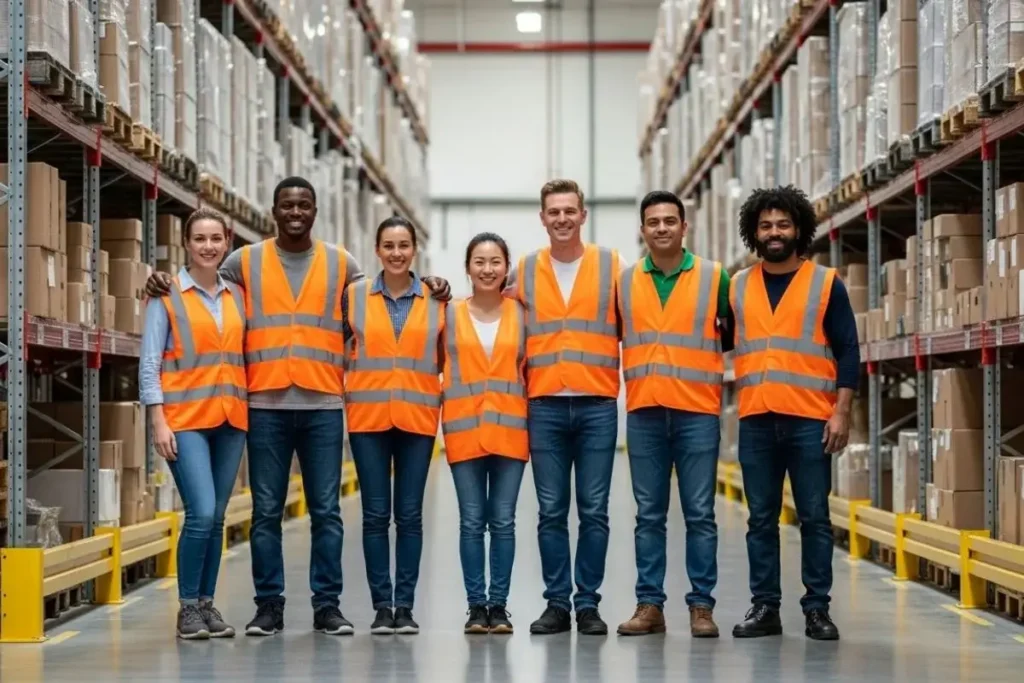
Ready to identify your highest-impact cost reduction opportunities? Request a warehouse cost assessment from EP Logistics. Our team will analyze your current operations and provide a prioritized roadmap with projected savings based on 20+ years managing 1.27M+ sq. ft. of logistics operations.
FAQs About Warehousing Costs
1. What is the formula for calculating warehouse costs?
The basic formula for total warehousing cost is:
Total Warehouse Cost = Direct Operating Costs + Indirect Carrying Costs
Where:
- Direct Operating Costs = Labor + Facility (rent/lease) + Equipment (depreciation/lease) + Utilities + Technology
- Indirect Carrying Costs = (Average Inventory Value) × (Carrying Cost %)
2. What is the average cost per square foot for warehouse space?
Warehouse costs per square foot vary significantly by region, building class, and market conditions:
- Primary Markets (Los Angeles, New Jersey, Chicago): $8–$15 per sq. ft. annually
- Secondary Markets (Dallas, Atlanta, Phoenix): $5–$9 per sq. ft. annually
- Tertiary Markets (El Paso, Memphis, Inland Empire secondary locations): $3–$6 per sq. ft. annually
- Class A (Modern, 30’+ clear height, dock doors): Premium pricing (+20–40% above market average)
- Class B/C (Older facilities, lower ceiling heights): Discounted pricing (−15–30% below market average)
3. How can a 3PL provider help reduce warehousing costs?
Third-party logistics providers deliver cost advantages through economies of scale and specialized expertise:
- Economies of Scale: 3PLs spread fixed costs (facility lease, WMS licensing, management overhead) across multiple clients, reducing per-unit costs. A company requiring 50,000 sq. ft. pays significantly less per square foot by using 3PL shared space than leasing a dedicated facility.
- Operational Expertise: Specialized 3PLs bring process optimization knowledge, trained labor pools, and established carrier relationships that take years to develop internally. They absorb demand variability (seasonal peaks, new product launches) without requiring clients to maintain excess capacity year-round.
- Technology Access: Enterprise-grade WMS, transportation management systems, and EDI integration require six-figure investments. 3PLs provide access to these platforms as part of standard service agreements.
EP Logistics, for example, operates as an integrated 3PL offering warehousing, customs brokerage, freight forwarding, and e-commerce fulfillment under a single provider model. This consolidation eliminates coordination gaps between separate vendors and provides clients with one invoice, one point of accountability, and transparent, activity-based pricing rather than bundled markups.
